
Bio
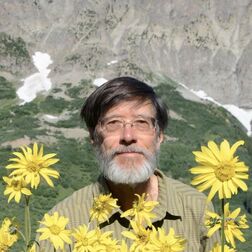
David Inouye
David’s work with hummingbirds started in 1972 as a beginning graduate student at the University of North Carolina, doing work on time-energy budget studies of male Broad-tailed Hummingbirds, the resident breeding species at the Rocky Mountain Biological Laboratory. Although he switched to working on bumble bees for his dissertation, he continued to do some work with hummingbirds; the oldest known wild hummingbird was a female Broad-tailed that was banded at RMBL and recaptured many of the next 12 years. His ongoing research at RMBL is funded by the National Science Foundation, and focuses on continuing a 50-year study of the wildflowers used by pollinators, looking at their flowering phenology and abundance. He also does work on the population biology of three species of wildflowers, with some individually tagged plants that he’s followed for 50 years. For the past several years David has been collaborating with Dr. Mary (Cassie) Stoddard, from Princeton University, and Noah Whiteman from Berkeley, on their research into hummingbird vision. He has been their bander, and typically bands about 300 birds each summer, mostly Broad-tailed, but also post-breeding Rufus and Calliope migrants. At his lower-altitude home near Paonia he bands some Black-chinned.